Our Bigger Dream
In Eastern philosophy, there is a great question posed: what is the nature of this age? What is the nature of our age? I submit that it is the globalisation of superficiality. Being ‘friends,’ for example, can mean one thing in a bricks-and-mortar school, whilst meaning something entirely different in the largest country on planet earth, Facebook. Lest you think I am joking, consider that Facebook has borders (virtual, bandwidth all around you), it has a population, it has rules of conduct (terms and conditions of use), it exhibits a certain ethos. I’m not providing a value judgement; I am only looking at it, as an entity. It should shock you, at least somewhat, that I would want to categorise Facebook as a nation. Yet, what is the nature of our age?
Toward a New Typology of Professional Learning
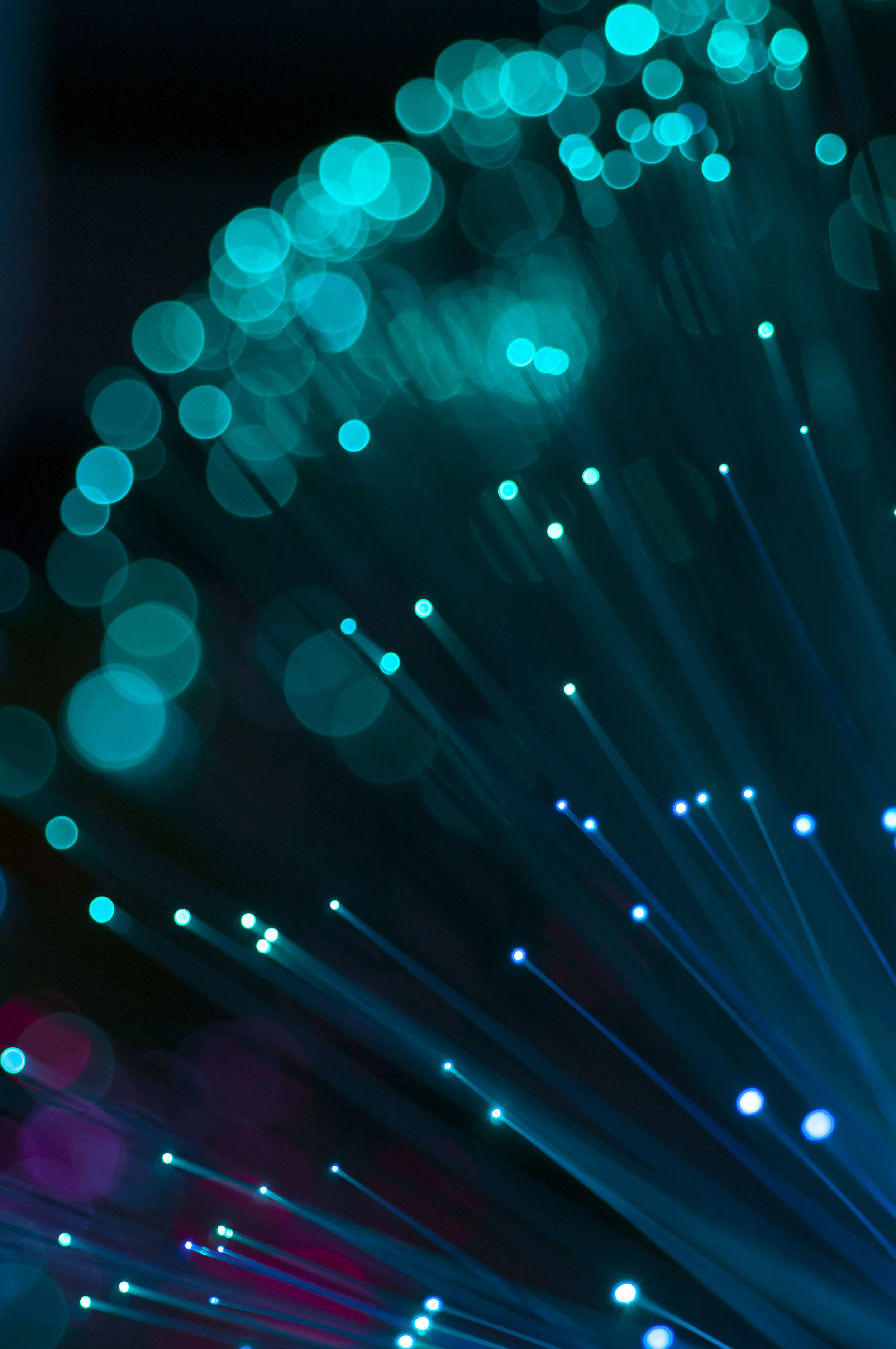
We've spent over 150 years layering a newer 'geography' atop that one by means of trains, cars (highways), and airplanes. We might call each one of these a typology, rather than a geography. They too constitute maps (rail maps, highway maps, flight maps), but these typologies can change as a result of connection (a concept that employs two companions, velocity and time). Allow me to provide an example. How far apart are London and Mumbai? In geographic terms, that would be 4,466 miles [7,187 km], but in typological terms, we'd have to say "that depends." For instance, it could be 10 hours by plane, or it could be 0.6 milliseconds by fibre-optic cable.
Reimagining Global Citizenship
We all would say that we are educating global citizens, that such citizenship is a hallmark of international education. Though I am ideologically aligned to that statement, I submit that we are (perhaps dramatically) out of alignment with reality. We are educating citizens for a world dominated by traditional power arrangements, yet those arrangements are being undermined by new, networked approaches to which the traditional arrangements don't (yet) know how to respond.
On Imaginative Gridlock
More learning (data gathering and theoretical application of technique) will not, on its own, change the way people see things or how they perceive them. "There must first be a shift in the emotional processes of that institution [in our case, international education as a sector]. Imagination and curiosity are at root emotional, not cognitive, phenomena. In order to imagine the unimaginable, people must be able to separate themselves from the surrounding emotional processes before they can even begin to see (or hear) things differently. Without this understanding, it becomes impossible to realise how our learning can prevent us from learning more." (Friedman, A Failure of Nerve, 31). In the event that this doesn't make sense, consider Galileo, who offered naysayers an opportunity to utilise his telescope to observe the movement of cosmic bodies, to look for themselves. So many naysayers, in those earliest days of his efforts, refused to observe, even when offered the chance. Consider just how much longer it took for things to evolve because their "learning" got in the way of learning, of becoming something more.

Innovation Nonsense
We are awash in a world of absolute nonsense insofar as the word innovation is concerned. There exists a remarkable euphoria in education around the term, intertwined with an ignorance as to its meaning, and therefore, usage. What do I mean?